


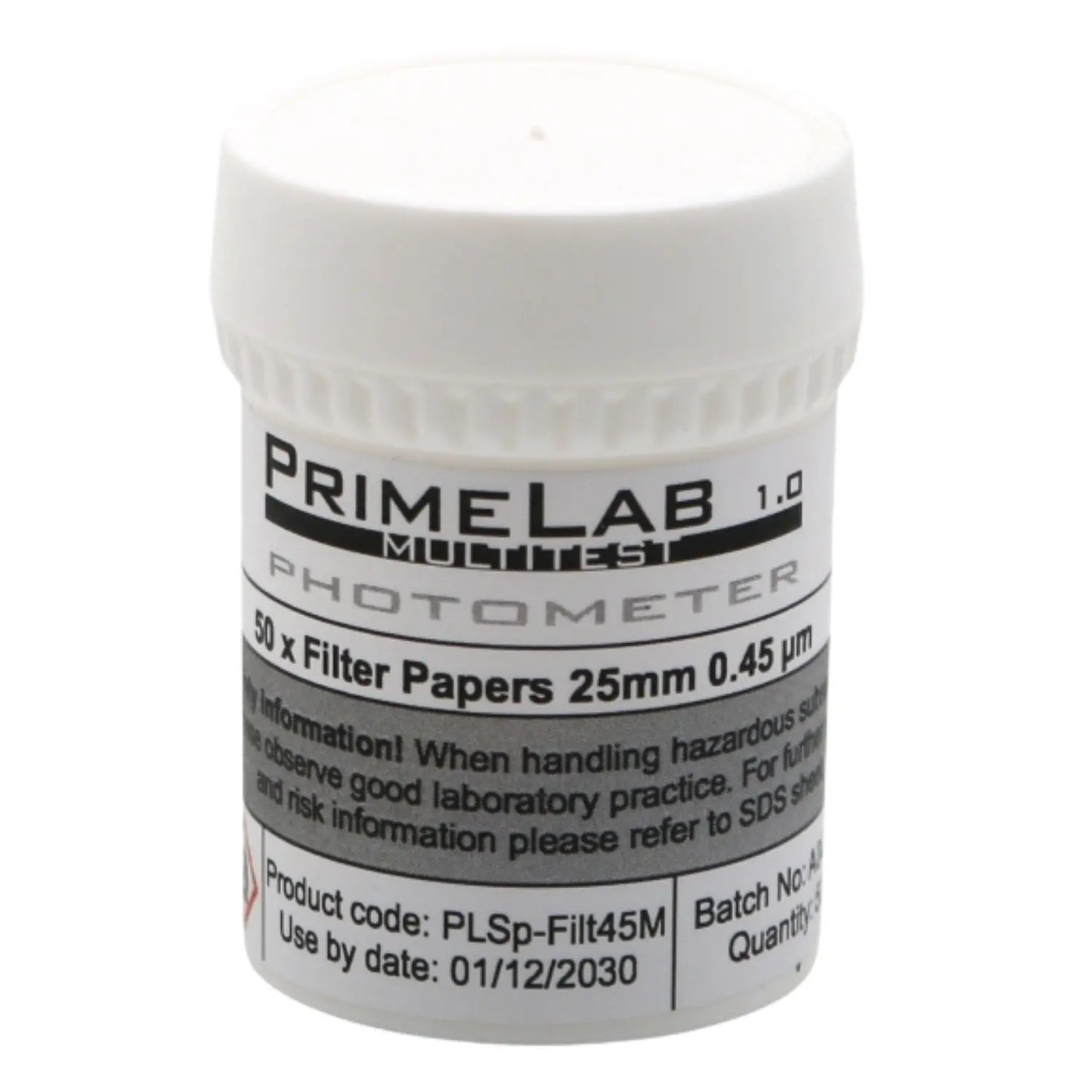
GF/C Filter Papers for Phosphate HR & Nitrate
GF/C Filter Papers for Phosphate HR & Nitrate
- Developed in Germany
- Item is located in the USA and ships from the USA. Orders ship within 24 hours. Free shipping on orders over $100. To find out the cost of worldwide shipping, simply add items to your cart and enter your shipping details — the rate will be calculated automatically
Couldn't load pickup availability
GF/C Filter Papers for Phosphate HR & Nitrate filtration workflow
These GF/C filter papers are used inside the Filter Paper Adapter to filter the sample as required by the Phosphate HR and Nitrate methods. They are not a general accessory — they are part of a specific filtration system designed to support consistent sample preparation.
How the system works
- Step 1: Place a filter paper into the Filter Paper Adapter.
- Step 2: Lock in the 20 mL Luer Lock syringe.
- Step 3: Push the sample through the filter for the Phosphate HR or Nitrate workflow.
Why it matters for accuracy
- Method-correct filtration: supports the sample prep step required for these tests.
- Repeatability: consistent filtration helps keep results more repeatable.
- Clean workflow: filtration helps reduce interference from particulates in the sample.
Required components (complete the setup)
- Adapter for Filter Papers — holds the filter paper
- 20 mL Luer Lock Syringe — locks into the adapter to push the sample through
Compatibility
- PoolWaterLAB photometer
- PrimeLab 2/0
- PoolLab 2.0
FAQ
Do I need these for Phosphate HR and Nitrate tests?
Yes — when the method requires filtration, these GF/C filter papers are used inside the adapter as part of the workflow.
Are these papers used on their own?
No. They are designed to be used inside the Filter Paper Adapter, together with the 20 mL Luer Lock syringe.
Share

Blog posts
-
Cyanuric Acid (CYA) in Pools: Safe Levels, Hidd...
Cyanuric Acid (CYA) protects chlorine from sunlight, but high CYA can make chlorine far less effective. Learn the ideal CYA range, warning signs of high levels, and how to test...
Cyanuric Acid (CYA) in Pools: Safe Levels, Hidd...
Cyanuric Acid (CYA) protects chlorine from sunlight, but high CYA can make chlorine far less effective. Learn the ideal CYA range, warning signs of high levels, and how to test...
-
Why 97% of Pool Chlorine Can Be Inactive (Free ...
High CYA can make chlorine far less effective—even when tests look normal. Learn the FC/CYA relationship, the 7.5% rule, and how to keep your pool truly sanitary.
Why 97% of Pool Chlorine Can Be Inactive (Free ...
High CYA can make chlorine far less effective—even when tests look normal. Learn the FC/CYA relationship, the 7.5% rule, and how to keep your pool truly sanitary.
-
Why Pool Test Strips Fail When Cyanuric Acid Is...
Test strips often look “fine” even when your pool isn’t truly sanitized—especially with high CYA. Learn why strips fail, what they miss, and how to test accurately.
Why Pool Test Strips Fail When Cyanuric Acid Is...
Test strips often look “fine” even when your pool isn’t truly sanitized—especially with high CYA. Learn why strips fail, what they miss, and how to test accurately.
-
The Only Reliable Way to Balance Cyanuric Acid ...
Balancing CYA and free chlorine is the key to clear, safe pool water. Follow a simple step-by-step method to set the right FC level based on your CYA.
The Only Reliable Way to Balance Cyanuric Acid ...
Balancing CYA and free chlorine is the key to clear, safe pool water. Follow a simple step-by-step method to set the right FC level based on your CYA.
- Choosing a selection results in a full page refresh.
- Opens in a new window.